
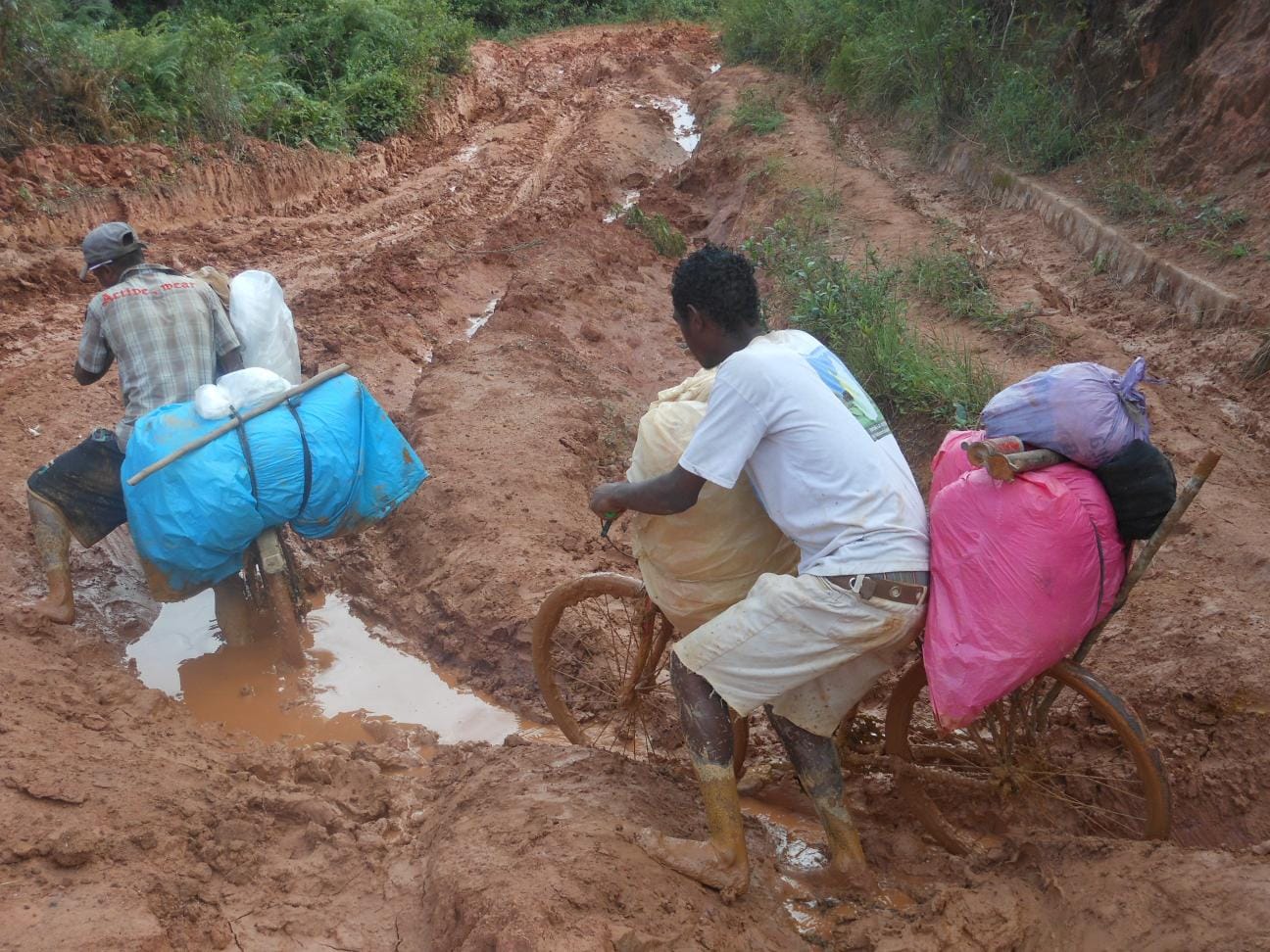
At the beginning of this new year, one quality keeps coming back to me insistently: perseverance. Not the kind that looks good in speeches, but the kind that is lived in real life, when everything seems to say that it would be easier to stop. The kind that quietly whispers: try one more time.
A road, an accident, a choice
During our last mission of the past year, we were leaving Ranomafana very early in the morning to return to Antananarivo. We had been driving for only a few minutes, just a few kilometers outside the town, when we came across an accident. A vehicle had gone off the road, and its driver, completely overwhelmed, was trying to find help.
We stopped without thinking too much about it. A few minutes later, passersby joined us. Together, we decided to try to get the vehicle back onto the road. The idea seemed simple, but the reality was far more complicated. We had no towing cable, only straps.
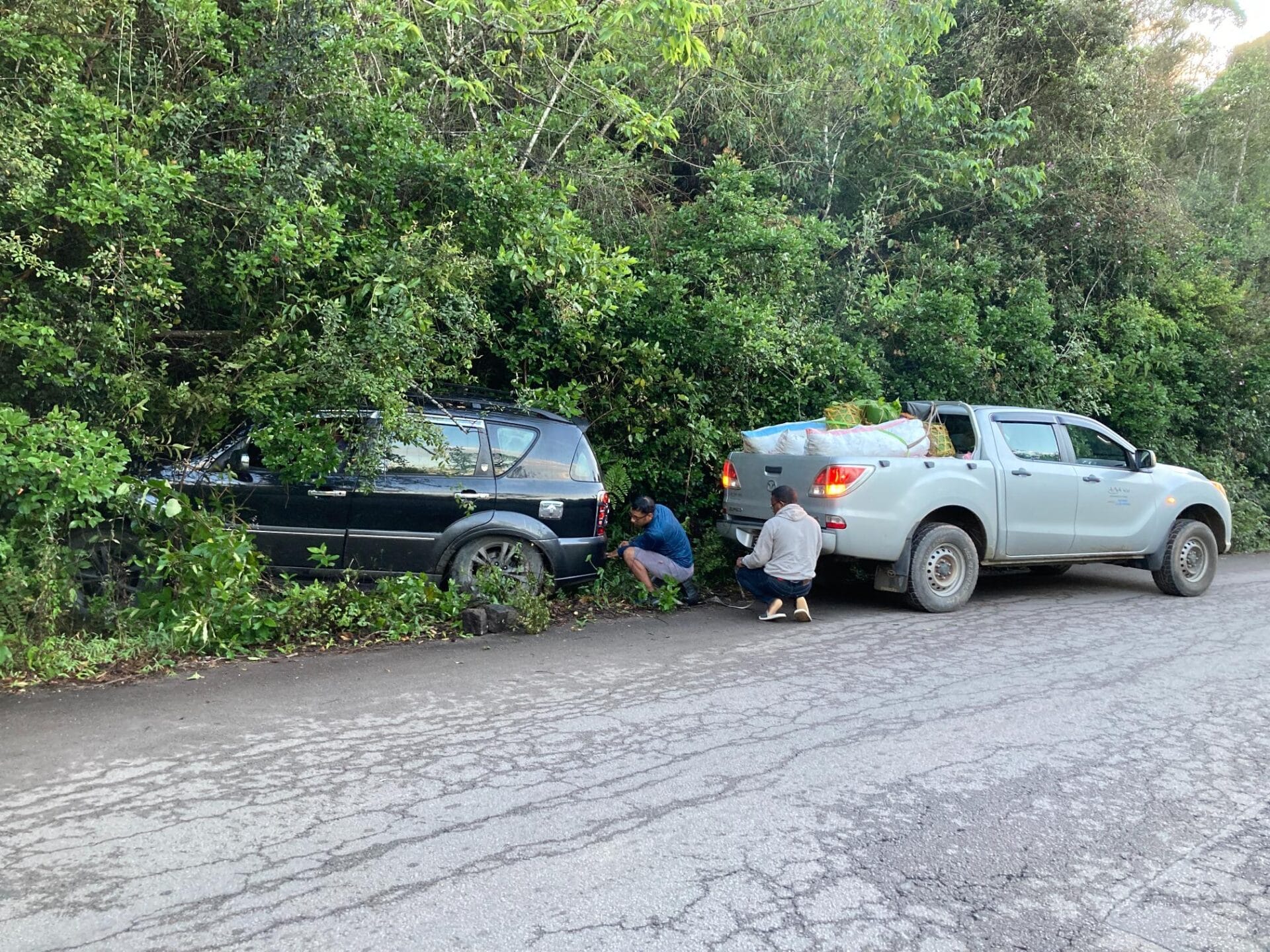
We tried. Then we tried again. Several times. The straps snapped one after another. Time kept passing. More than an hour and a half went by pulling, pushing, thinking, starting over. And all the while, more than 500 kilometers still lay ahead of us before reaching Antananarivo.
That’s when Maro, our driver, set a clear boundary: we try one last time, and if it doesn’t work, we stop. Not out of a lack of will, but because it was also important to know when to stop. That final attempt, made together, was successful. The vehicle moved, then found its way back onto the road. A simple moment, but one that left a deep impression.
Note: It was only after we got the car back on the road that we noticed the front wheel was completely dislocated. That’s what made it difficult to free the car.
That “last attempt” that makes the difference
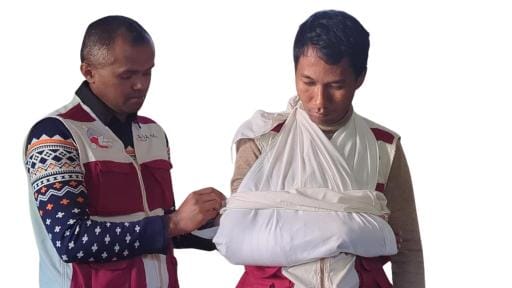
Looking back, this scene closely mirrors what we have experienced within our organization. For more than ten years, we have been working in the field of first aid training. In Madagascar, these skills are still little known and rarely considered a priority.
During our first decade, we had to fight just to exist. Finding partners, constantly explaining why first aid is essential, accepting that only one or two companies trusted us on a regular basis. Personally, there were moments of discouragement, times of self-doubt, and sometimes the temptation to slow down or give up.
But, just like on that road near Ranomafana, we kept going. One more step. One more training session. One more meeting. And then, at the beginning of our second decade, things started to change. People began to know us. To trust us. Today, even international organizations call on us.
Persevering without becoming stubborn
Perseverance is not blind stubbornness. It is knowing why you move forward, accepting failures, adjusting the way you do things, but not giving up too quickly. It is also about knowing how to set boundaries, as our driver did that morning: trying one last time, consciously.
In our work of providing first aid training in Madagascar, this perseverance has been a collective one. It has been built over the years through refusals, misunderstandings, and repeated efforts to raise awareness, explain, and convince. For a long time, the results seemed minimal. Yet every training, every meeting, every partnership mattered.
Today, if various entities—and even international organizations—place their trust in us, it is not the result of quick success. It is the outcome of many attempts, constant commitment, and a shared conviction: first aid saves lives and deserves to be known by everyone.
In 2026, this is the form of perseverance I wish to continue cultivating, both personally and professionally: the kind that accepts time, values mutual support, and does not give up just before things begin to change.
All the best for 2026
Mirindra, director